
Neural Rendering and Path Tracing in DOOM: The Dark Ages

id Software on shipping path tracing in id Tech 8 — Opacity Micro-Maps, Shader Execution Reordering, and DLSS 4 to balance image quality with performance.

Studio id Software
Technology id Tech 8 · Path Tracing
Category Optimization
Source NVIDIA
Neural Rendering and Path Tracing in DOOM: The Dark Ages

Overview

id Software shipped path tracing in id Tech 8 for DOOM: The Dark Ages in approximately six months — a timeline most studios would consider aggressive for this level of rendering overhaul. Billy Khan, the project lead, summed up the philosophy: "a technique is only viable if it ships."

The integration combined Opacity Micro-Maps for alpha geometry, Shader Execution Reordering for divergent warps, and DLSS 4's transformer model for upscaling and denoising. Path tracing is now permanently part of id Tech 8 going forward.

Curated by Feative Studios
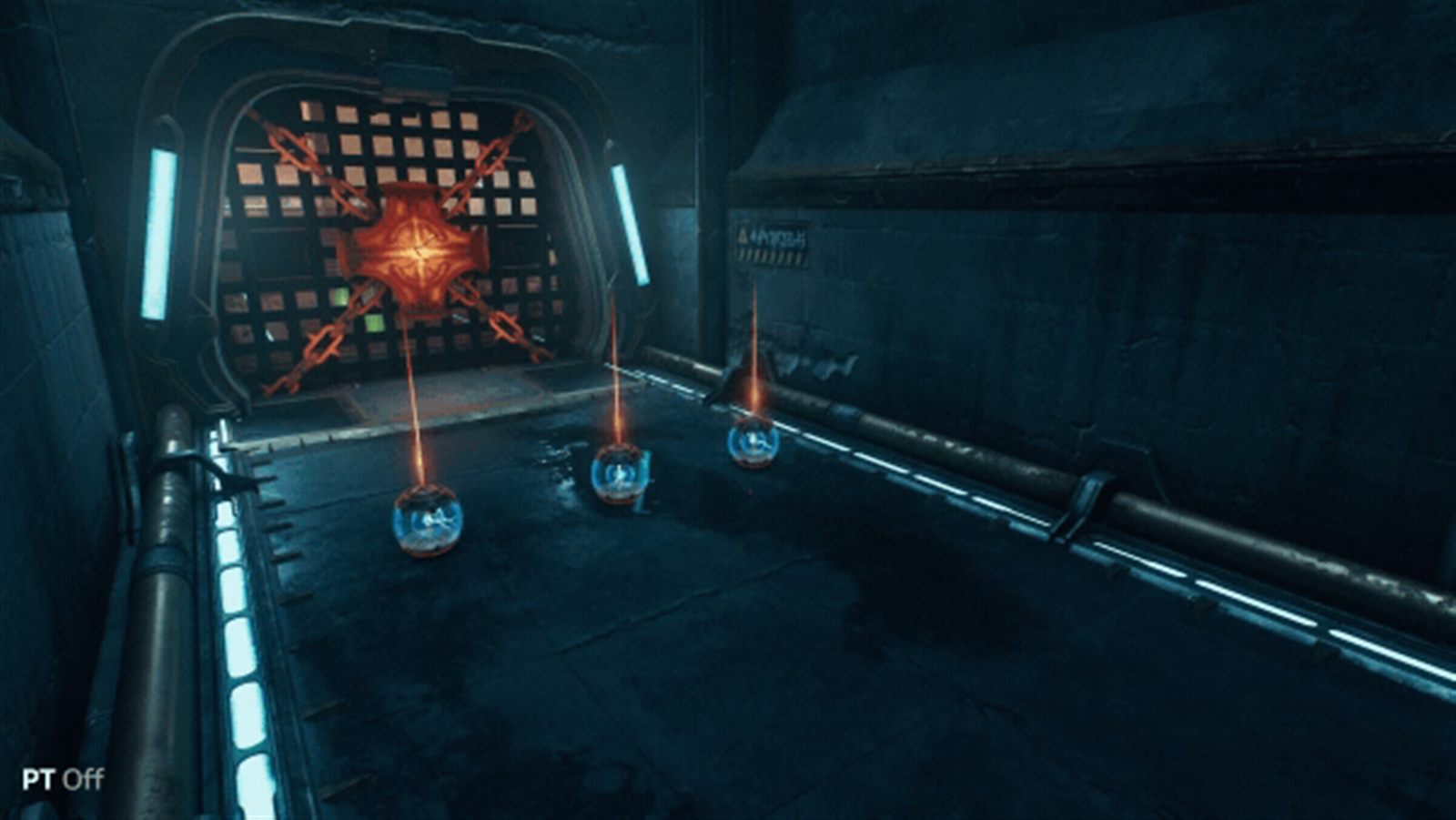
Neural Rendering and Path Tracing in DOOM: The Dark Ages

Challenge

Path tracing is significantly more expensive than standard ray tracing because it replaces the entire shading pipeline with recursive ray bounces. DOOM: The Dark Ages features dense, transparency-heavy scenes with fast-paced gameplay — any performance drop is immediately noticeable and breaks the franchise's signature fluidity.

The path tracing integration needed to work across a wide range of hardware without introducing visual artifacts, and the team had a tight six-month window to move from prototype to shipping quality.

Solution

Opacity Micro-Maps encode alpha-tested micro-triangles onto larger parent triangles, reducing the number of ray-triangle intersection tests for transparent geometry. Shader Execution Reordering tames divergent warps by grouping rays with similar behavior, keeping GPU cores busy instead of idle.

DLSS 4's transformer model evaluates all pixels simultaneously rather than processing small local regions like CNN-based denoisers. This produces better edge handling, less ghosting, and cleaner results in motion — critical for DOOM's fast camera movement. Ray Reconstruction and Super Resolution work in tandem to maintain image quality while boosting performance.

For high refresh rate targets, DLSS 4 Multi Frame Generation generates additional frames. BVH optimization further reduced overhead — refits run up to 10x faster than full rebuilds, which matters when scene geometry changes every frame.

Result

Path tracing shipped in roughly six months and is now permanently integrated into id Tech 8 as a standard rendering path. The DLSS 4 transformer model simultaneously improves visual quality and performance — a rare combination that validates the neural rendering approach for future id Tech titles.

Key Takeaways

Takeaway 1Billy Khan: demonstrating path tracing in a shipping game matters more than academic demos — the technique is only viable if it ships.
Takeaway 2DLSS 4's transformer model processes all pixels simultaneously vs. CNN's small local regions, producing cleaner edges and less ghosting in fast motion.
Takeaway 3Start with general ray tracing to understand the pipeline before attempting path tracing — the foundational knowledge transfers directly.

Original Study

Source Neural Rendering and Path Tracing in DOOM: The Dark Ages

An NVIDIA Developer Blog article detailing id Software's rendering approach for DOOM: The Dark Ages.

View the Original Study
Keep Exploring

Want results like this?

Whether it is a full product or targeted engineering support, Feative Studios plugs into your pipeline with no friction.