
How Dragon Quest XI Came to Life with Unreal Engine 4

Square Enix brought the acclaimed JRPG to life in UE4 — cel-shaded visuals, Enlighten lighting, quick editor iteration, and engine changes merged back upstream.

Studio Square Enix
Engine Unreal Engine 4
Category Game Development
Source Unreal Engine
How Dragon Quest XI Came to Life with Unreal Engine 4

Overview

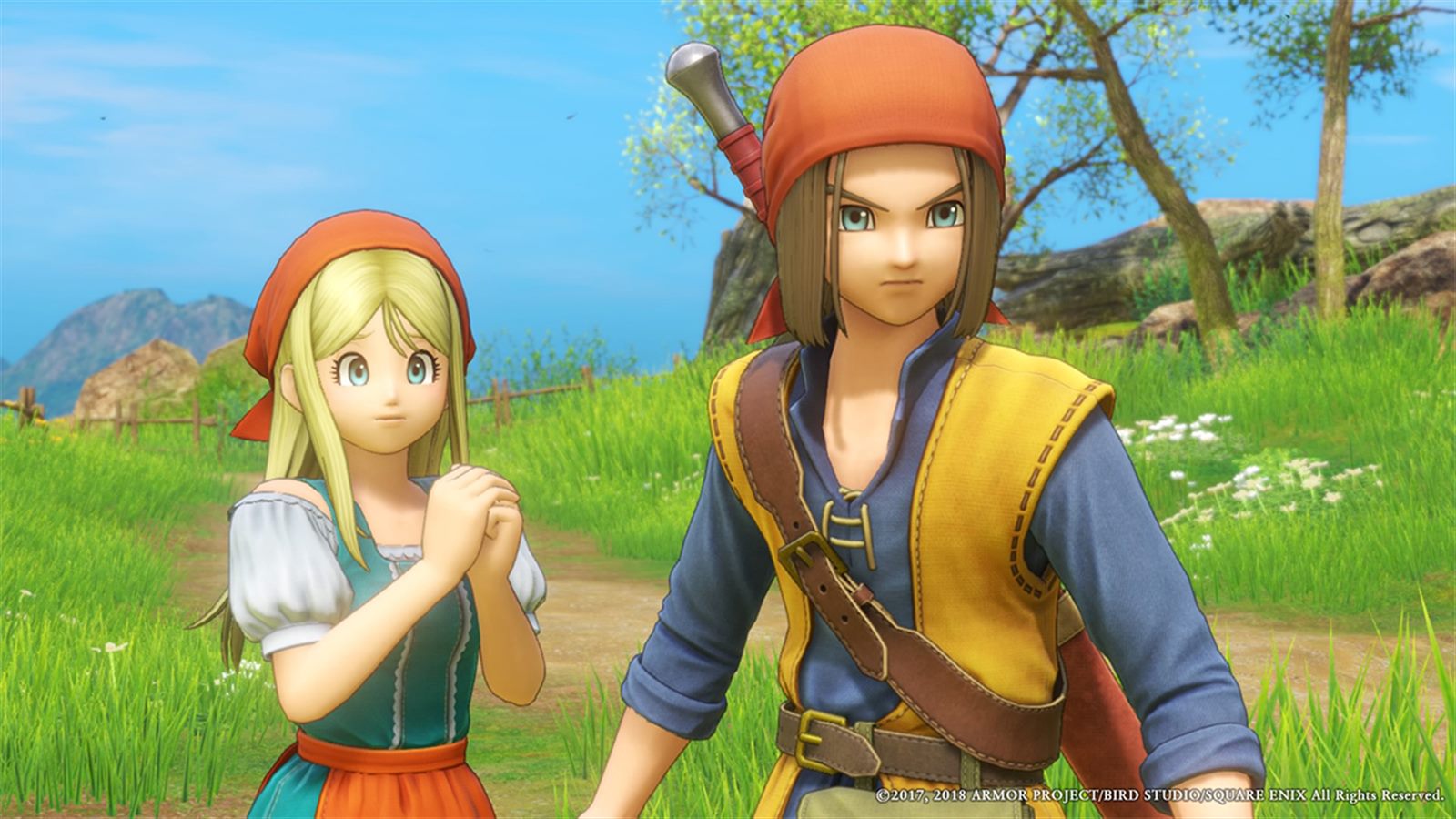
Dragon Quest XI is the first numbered Dragon Quest built on a non-bespoke engine. Square Enix adopted Unreal Engine 4 with Enlighten for dynamic lighting, enabling a day/night cycle that was essentially a value tweak rather than a systems rewrite. The team paired Akira Toriyama's cel-shaded character designs with photorealistic environments rendered in UE4 — a combination that required careful material and lighting work.

Square Enix collaborated directly with Epic on garbage collection fixes that were merged into mainline UE4, benefiting all engine users. The final build supported 4K rendering, vast draw distances, and minimal load times across PC, PS4, PS4 Pro, and Nintendo Switch.
Curated by Feative Studios
How Dragon Quest XI Came to Life with Unreal Engine 4

Challenge

This was Square Enix's first time using a third-party engine for a numbered Dragon Quest title. The team needed to blend stylized cel-shaded characters — a hallmark of Toriyama's art — with photorealistic environments without either element clashing. The world was massive with extensive draw distances, and the game had to ship on PC, PS4, PS4 Pro, and Nintendo Switch, each with different performance profiles.

Solution

Enlighten handled real-time global illumination and the dynamic day/night cycle, which the team adjusted by changing a single value rather than rebuilding lighting maps. UE4's editor enabled rapid iteration — designers could modify terrain in the morning and see those changes reflected in next-day test builds, compressing the feedback loop for a world that spanned dozens of hours of content.

Square Enix worked with Epic on garbage collection improvements that addressed hitches in the open world. These fixes were upstreamed into mainline UE4, improving performance for all engine users.

Result

Dragon Quest XI shipped at 4K resolution with vast draw distances and minimal load times across PC, PS4, PS4 Pro, and Nintendo Switch. The game earned rave reviews in both western and Japanese markets — a rare crossover success for the franchise. The garbage collection fixes contributed to UE4 improved open-world streaming for every game using the engine going forward.

Key Takeaways

Takeaway 1A non-bespoke engine can carry a flagship JRPG at full scale — Dragon Quest XI proved UE4 could handle the scope, art style, and performance demands of a tentpole franchise.
Takeaway 2Quick editor iteration is a force multiplier for massive worlds — designers modifying terrain and seeing results in next-day builds compressed a months-long feedback loop.
Takeaway 3Engine-level tuning (GC) contributed back upstream to Epic, benefiting all UE4 users — a model for how licensees can improve shared infrastructure.

Original Study

Source How Dragon Quest XI Came to Life with Unreal Engine 4

An Unreal Engine spotlight interview with Dragon Quest XI Director Takeshi Uchikawa.

View the Original Study
Keep Exploring

Want results like this?

Whether it is a full product or targeted engineering support, Feative Studios plugs into your pipeline with no friction.