
Path Tracing Optimization in Indiana Jones

Reducing ray-tracing live-state bytes with Shader Execution Reordering cut GPU time 24% on the main path-tracing pass of Indiana Jones and the Great Circle.

Studio MachineGames + NVIDIA
Technology Ray Tracing · SER
Category Optimization
Source NVIDIA
Path Tracing Optimization in Indiana Jones

Overview

MachineGames and NVIDIA shipped full path tracing in Indiana Jones and the Great Circle — a collaboration spanning a joint team of 20+ engineers. The project focused on reducing per-ray GPU overhead to make path tracing viable at 4K/60fps on RTX 4090-class hardware.

The core optimization involved profiling and reducing the ray-tracing live-state: the bytes the GPU must keep in registers for each active ray. By combining Shader Execution Reordering with aggressive variable demotion and layout fixes, the team cut GPU time by 24% on the main path-tracing pass.

Curated by Feative Studios
Path Tracing Optimization in Indiana Jones

Challenge

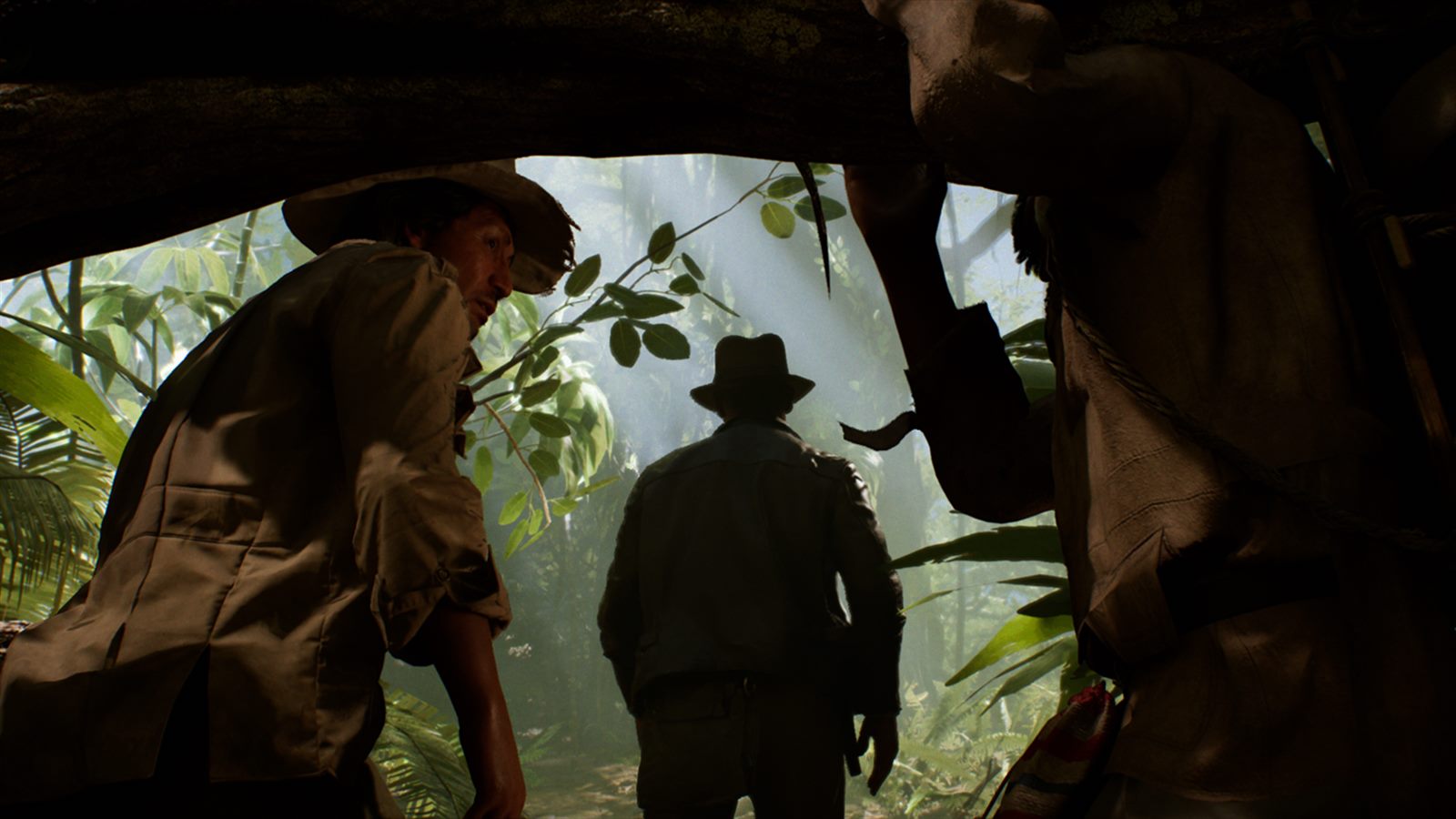
Path tracing is fundamentally more expensive than traditional rasterization — every pixel requires multiple ray bounces through the scene. For Indiana Jones and the Great Circle, the Peru jungle sequence presented one of the hardest scenarios possible: dense alpha-tested vegetation where every leaf, branch, and blade of grass is a separate triangle generating its own ray intersections.

The team needed to hit 60fps at 4K while preserving the cinematic lighting quality that path tracing delivers. Standard optimizations were not enough — the live-state size (bytes the GPU holds per ray) was too large, causing register spilling to local memory and tanking occupancy.

Solution

The team profiled at the traceRay call-site level using Nsight GPU Trace to identify exactly which GLSL variables were spilling to memory. One loop alone was spilling 72 bytes of live-state. By demoting radianceAndAccumHitDist from float4 to half4, RT live-state dropped from 222 to 84 bytes per thread — effectively halving the register pressure.

Shader Execution Reordering grouped divergent ray types for better GPU coherence, while Opacity Micro-Maps encoded alpha-tested vegetation micro-triangles into larger bounding structures. Dynamic BLAS compaction further reduced memory overhead for the dense jungle geometry.

On the output side, DLSS Ray Reconstruction replaced traditional temporal denoisers with a transformer-based model that produces cleaner results from fewer primary rays.

Result

The optimizations delivered a 24% GPU time reduction in the TraceMain pass on RTX 5080. The game ships at 4K/60fps on RTX 4090, with a minimum spec of RTX 4070 handling 1080p upscaled — making full path tracing accessible beyond flagship hardware.

Key Takeaways

Takeaway 1Profiling at the traceRay call-site level reveals exactly which GLSL variables spill to memory — one loop alone was spilling 72 bytes.
Takeaway 2Opacity Micro-Maps are critical for dense alpha-tested vegetation where every leaf is a separate triangle generating expensive ray intersections.
Takeaway 3The joint 20+ engineer co-development between MachineGames and NVIDIA went beyond a standard partnership, with deep engine-level profiling driving the gains.

Original Study

Source Path Tracing Optimization in Indiana Jones: SER + Live State Reductions

An NVIDIA Developer Blog deep-dive by MachineGames and NVIDIA engineers.

View the Original Study
Keep Exploring

Want results like this?

Whether it is a full product or targeted engineering support, Feative Studios plugs into your pipeline with no friction.