
KFC Re:Store: Connecting the Virtual and Real Worlds

An Unreal Engine virtual KFC store on QQ — 19M visitors and 4.3B interactions in five weeks, with in-metaverse ordering that delivers in the real world.

Studio Merkle + KFC China
Engine Unreal Engine
Category Metaverse
Source Merkle
KFC Re:Store: Connecting the Virtual and Real Worlds

Overview

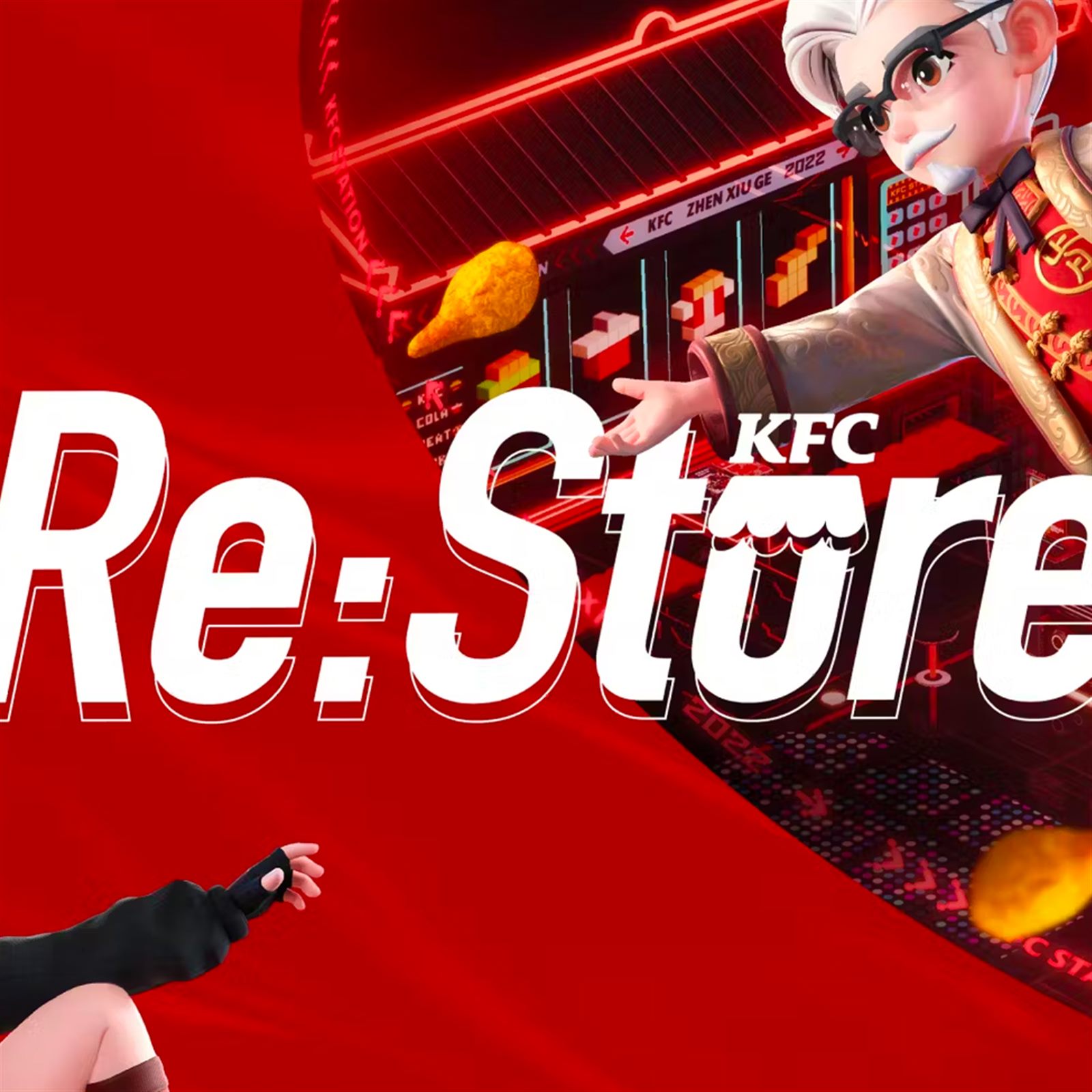
KFC China opened a virtual store on Tencent's QQ platform built in Unreal Engine 4, featuring avatar costumes, virtual furniture, a virtual pet named Fengwan, and a proprietary virtual currency called Chicken Coins.

The store introduced \"borderless commerce\" — customers order in the metaverse and receive real-world delivery — bridging virtual engagement directly to physical revenue. In five weeks, the store drew 19 million visitors, generated 4.3 billion interactions, and served 180 million virtual food items.

Real-world impact followed: four million burgers sold in one week — five times faster than previous promotions. The project won a Cannes Bronze Lion.

Curated by Feative Studios
KFC Re:Store: Connecting the Virtual and Real Worlds

Challenge

KFC store traffic was declining as Gen Z increasingly socialized in virtual spaces — surveys showed 50% of young consumers hang out more in games than in real life. A 16% business performance decline by 2022 made the urgency concrete.

The challenge was bridging virtual engagement to real-world revenue without building a standalone app that nobody would download. The audience already lived inside QQ — the store needed to meet them there, not ask them to leave.

Solution

UE4 powered the virtual store, integrated directly into Tencent's QQ platform. The team launched the first virtual currency on QQ (Chicken Coins) and the first NPC on the platform (Colonel Sanders), establishing mechanics that QQ users already understood from gaming.

Borderless commerce ordering let customers browse virtual menu items, place orders in the metaverse, and receive real-world delivery — closing the loop between virtual engagement and physical sales. Extensive avatar wardrobes and virtual furniture gave users reasons to return beyond the transactional flow.

Result

Nineteen million visitors, 4.3 billion interactions, and 180 million virtual food items in five weeks. Four million real-world burgers sold in one week — five times faster than previous promotions. Thirty million Chicken Coins distributed in three days.

The virtual store outsold physical stores by volume, and users spent more time styling their avatars than themselves. The project won a Cannes Bronze Lion and proved that virtual brand spaces on existing platforms can drive measurable, real-world revenue.

Key Takeaways

Takeaway 1Borderless commerce — virtual orders triggering real-world delivery — closes the loop between engagement and revenue, turning a brand space into a sales channel rather than just a marketing exercise.
Takeaway 2The virtual store outsold physical stores by volume, proving that virtual experiences can be primary revenue drivers when they meet users where they already spend time.
Takeaway 3Users spent more time styling avatars than themselves — lean into that. Avatar customization is a retention mechanic, not a cosmetic extra.

Original Study

Source KFC Re:Store: Connecting the Virtual and Real Worlds

A Merkle case study on the KFC Re:Store virtual experience built for KFC China.

View the Original Study
Keep Exploring

Want results like this?

Whether it is a full product or targeted engineering support, Feative Studios plugs into your pipeline with no friction.